|
|
|
Jogos de Natal 1982
(Quartet / Trio)
Jeux Sans Frontières Specials
Entrants 1982:
Belgium (B) • Great Britain (GB) • Netherlands (NL) • Portugal (P)
Presenters:
Walter Capiau (BRT - B)
Vince Hill (BBC - GB)
Dick Passchier (NCRV - NL)
Eládio Clímaco and Yvonne Ferreira (RTP - P)
Production Credits:
National Games Designers:
Adolfo 'Popi' Perani (Quartet) and Stuart Furber (Trio);
National Producers:
Guido Depraetere and Jan Geysen (B),
George R. Clarke, Allan Stuart and Geoff Wilson (GB),
Dick van 't Sant and Harry van der Steeg (NL),
Producers: António Bivar and Joao Nuno Nogeira (Quartet) and
Geoff Wilson (Trio); Directors: Etienne d'Hooghe (Quartet) and Bill Taylor (Trio)
Produced by RTP (P)
in association with BRT (B), BBC Manchester (GB), NCRV (NL)
|
Key:
International Christmas Special
● =
Winner of Christmas Special
▲ = Promoted to Position / ▼ =
Demoted to Position |
|
|
P |
Quartet - Jogos de Natal 1982 |
Christmas Special
(First Version) |
|
Event Staged: Saturday
23rd October 1982
Venue:
Praia do Carvoeiro (Carvoeiro Beach), Carvoeiro, Portugal
European Transmissions (Local Timings):
BRT 1 (B): Sunday 26th December 1982, 4.45-5.45pm (as Kwartet)
BBC1 (GB): (not transmitted)
RTP (P): (not transmitted)
Nederland 1 (NL):
(not transmitted)
Weather Conditions: Hot and Sunny
Celebrity Performers / Competitors:
Roger de Vlaeminck, World Champion cyclist (B)
Dana, singer (GB)
Hans Kazàn, magician and illusionist (NL)
Paulo Caetano, bullfighter and horseman (P)
Commemorative Trophies presented by:
Eládio Clímaco |
|
Theme:
Festive Fun |
|
Teams: Blankenberge (B) v. Plymouth
(GB) v.
Hilversum (NL) v. Praia do Carvoeiro (P) |
|
Team Members included:
Blankenberge (B) - Willem Content (Mayor of Blankenberge), Roger
de Vlaeminck (Celebrity), Walter Capiau (Presenter), Françoise d'Alphen, André
Marmanaud, Danny van Teyne, Martin de Recke, Karin van Teyne;
Plymouth (GB) - Reg Scott (Mayor of Plymouth), Dana
(Celebrity), Vince Hill (Presenter), Les Crawford, Karen Hurst, Dawn Kay, Andrew
Mastochy, Tony Murphy, Jill Perry;
Hilversum (NL) - Kris Rukken (Mayor of NUTS-1), Hans Kazàn
(Celebrity), Dick Passchier (Presenter), Fred Benavente, Leontine Ceulemans,
Lisette Hordijk, Catherine Keyl, Sipke van der Land and Henk Mouwe;
Algarve (P) - Adel Santos (Mayor of Lagoa), Paulo
Caetano (Celebrity), Eládio Clímaco (Presenter), André Bernensio, Elsa
Kabissa, Fernando Martins. |
|
Games: The Rescue Party, Postal Delivery (Mayors' Game), Collecting the
Froth,
The Blindfolded Bellringers (Celebrities' Game), Decorating the Christmas Tree, Spin
the Wheel (Mayors' Game), The Caged Ball Catchers, Collecting Ping-Pong
Balls (Celebrities' Game), The Wine Collectors, Sorting the Food (Presenters' Game),
Finding the Wine (Mayors' Game), Dressing Up (Presenters' Game), The
Celebration Cake. |
|
Game
Results and Standings |
|
Games |
|
Team /
Colour |
1 |
2 |
3 |
4 |
5 |
6 |
7 |
8 |
9 |
10 |
11 |
12 |
13 |
|
Points Scored |
|
B |
4 |
4 |
4 |
4 |
4 |
5 |
2 |
3 |
4 |
0 |
4 |
1 |
4 |
|
GB |
3 |
2 |
4 |
1 |
4 |
5 |
4 |
1 |
2 |
0 |
2 |
2 |
6 |
|
NL |
1 |
3 |
4 |
3 |
1 |
-8 |
1 |
4 |
3 |
0 |
4 |
4 |
2 |
|
P |
2 |
1 |
4 |
2 |
4 |
-9 |
3 |
2 |
1 |
0 |
2 |
3 |
8 |
Running Totals
(Leading teams shown in red) |
|
B |
4 |
8 |
12 |
16 |
20 |
25 |
27 |
30 |
34 |
34 |
38 |
39 |
43 |
|
GB |
3 |
5 |
9 |
10 |
14 |
19 |
23 |
24 |
26 |
26 |
28 |
30 |
36 |
|
NL |
1 |
4 |
8 |
11 |
12 |
4 |
5 |
9 |
12 |
12 |
16 |
20 |
22 |
|
P |
2 |
3 |
7 |
9 |
13 |
4 |
7 |
9 |
10 |
10 |
12 |
15 |
23 |
|
|
|
Result |
Team |
Points |
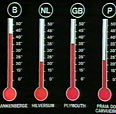
Final Scoreboard |
|
1st
2nd
3rd
4th |
B •
Blankenberge
●
GB • Plymouth
P • Praia do Carvoeiro
NL • Hilversum |
43
36
23
22 |
 |
|
The Host
Town |
|
Carvoeiro, Portugal
Carvoeiro is a small village with a population of around
3,000 inhabitants in the district of Faro and is located 46km (29 miles) west
of Faro, 146km (91 miles) south-east of Moura, 189km (117 miles) south-east of
Lisboa and 916km (569 miles) north-west of Funchal, capital of the Portuguese
island of Madeira. It should be noted that the official district of Faro
covers the same area which is more commonly-known as the Algarve. The only
significant difference is that the Algarve is split into two distinct halves -
Barlavento (windward-facing) which runs from the western boundary of the city
of Faro along to coast of the Atlantic Ocean and Sotavento (leeward-facing)
which runs from the eastern boundary along to the border with Spain.
Dating back to Roman times, the parish and picturesque village have had a long
history of settlements with the name of the town originating from Caboiere, an
old Islamic name for a hamlet of fishermen.
The
region was frequently subjected to pirate and military assaults along the
coast, with a number of naval battles occurring in the area. Most notably, in
1544, a squadron of ships under Pedro da Cunha, did battle with the Turkish
barbary coast pirate, Xarramet.
For
most of its history, fishing was the mainstay of the local economy. However,
from the 1960s onward, and somewhat due to its vast number of sandy beaches
protected by high cliffs, tourism gradually became the economic base of the
area, with many new hotels, apartment complexes, shops, roads, and significant
improvements to infrastructures completed to attract visitors to the region.
A
few hundred metres along the coast east of the main square and beach, is a
popular nature site where ocean wave erosion has carved out grottoes, islets
and water-spouts. It is also renowned in the vicinity for prime marine life
spotting. In 2011, a blue whale (Balaenoptera musculus) was sighted off the
coastline by local fishermen, but more commonly, bottlenose dolphins (Tursiops
aduncus) are seen in pods of up to 12. |
|
The
Visiting Towns |
|
Blankenberge is a town and resort with a population of around 21,000
inhabitants in the néerlandophonic (Dutch-speaking) Belgian province of
West-Vlaanderen and is located 1,826km (1,134 miles) north-west of Carvoeiro.
Plymouth is a city with a population of around 280,000 inhabitants in the
English county of Devon.
Hilversum is a town of around 95,000 inhabitants in the Dutch province of
Noord-Holland and is located 1,991km (1,237 miles) north-west of Carvoeiro. |
|
The Venue |
|
Praia do Carvoeiro (Carvoeiro
Beach)
The games for this festive edition were played on the sands of
the local beach.
Due
to its size and importance, very little information is available for research
regarding the beach. However, what is known is that it has high craggy cliffs,
calm waters and located south of the centre of Carvoeiro. From the beach,
tourists have the opportunity to take a boat trip around the caves or to take
part in water sports during the high season. |
|
The Games
in Detail |
|
Introduction
Following the opening titles, Portuguese presenter Yvonne Ferreira introduced
the commentators beginning with her fellow countryman, Eládio Clímaco, who
entered the arena riding a bicycle. After being handed the microphone, he then
introduced Belgian presenter Walter Capiau, who made his entrance on the back
of a donkey. He then introduced British presenter Vince Hill to the audience,
and Hill entered the arena in a horse-drawn hackney carriage. After a few
words, Hill then handed the microphone to Yvonne Ferreira and she introduced
Dutch presenter Dick Passchier, who had dressed as Father Christmas. Following
on from this, the mayors of the four competing towns were transported into the
arena by horse and cart and introduced individually to the assembled crowd.
Game 1 - The Rescue Party
The first game - ‘The Rescue Party’ - was introduced by RTP co-presenter
Eládio Clímaco and played in unison over one minute duration. It featured all
six competitors (three males and three females) from each team and the four
celebrities, who were located in bathing huts at the far end of the course. On
the whistle, the teams had to race down the 25m (82ft) course, traversing a
small hurdle en route, in order to reach the bathing hut. They then had to rip
open the hut (which was actually constructed of paper) to reveal their
respective celebrity sitting on a wooden chair. They then had to lift the
chair off the ground and carry the mayor back to the start of the course,
traversing the hurdle and placing him on a podium. The team completing the
game in the faster time would be declared the winners.
This was a very straightforward and simple game which saw two of the Great
Britain competitors jumping the gun and starting prematurely. However, after
all the teams had raced down the beach, Belgium were the first to set off on
the return journey ahead of Great Britain. Despite a little cheating by the
British team, whereby their celebrity ran on foot over the final three metres
(9ft 10¾in) of the course, Belgium completed the game in 27 seconds followed
by Great Britain one second later. Portugal completed the game in 32 seconds
with Netherlands failing in their task and deemed out of time.
|
Running Scores and Positions:
1st Blankenberge (B) (4pts awarded / 4pts total)
2nd Plymouth (GB) (3pts / 3pts)
3rd Praia do Carvoeiro (P) (2pts / 2pts)
4th Hilversum (NL) (1pt / 1pt) |
|
Comments:
When the teams entered the beach arena, they were dressed
in winter-style clothing and were pretending that the weather conditions
were chilly. However, after a few seconds, all the competitors removed the
warm clothing to reveal their 1920s all-in-one colour-coded beachwear.
This pretence was merely a nod to the fact that viewers in three of the
competing countries would actually be experiencing significantly lower
temperatures than Portugal at the time of the programme's winter
broadcast. |
Game 2 - Postal Delivery
(Mayor's Game)
The second game - ‘Postal Delivery’ - was introduced by BBC commentator Vince
Hill and was the first of three which featured the four mayors of the
competing countries. On the whistle, a postman on a bicycle had to ride into
the arena carrying a large leather sack which he would then hand to the
presenter. Hill then had to remove four envelopes from inside the sack and
hand one to each of the mayors who were sitting around a table. The mayors
then had to be asked, one by one, to open their respective envelopes to reveal
a message and this would instruct the scoreboard operators to add a stated
number of points to his respective team’s score.
This was a very simple and straightforward game which appeared to be dependant
on which of the envelopes Vince Hill decided to hand to the mayors. The first
mayor to reveal his message was Kris Rukken from NUTS-1 (the region of North
Netherlands in which Hilversum is located) and he awarded 3pts to his team.
This was followed by Adel Santos, the mayor from Lagoa (the administrative
district in which Carvoeiro is located), awarding 1pt to his team. The third
mayor to declare was Willem Content from Blankenberge and he awarded 4pts to his team whilst
the final mayor, Reg Scott from Plymouth, awarded 2pts to his team.
|
Running Scores and Positions:
1st Blankenberge (B) (4pts awarded / 8pts total)
2nd Plymouth (GB) (2pts / 5pts)
3rd Hilversum (NL) (3pts / 4pts) ▲
4th Praia do Carvoeiro (P) (1pt / 3pts) ▼ |
|
Entertainment
Intermission 1
There was short break of 3 minutes 28 seconds from the main programme whilst
the first of the four celebrities entertained the crowd. The first was Irish
singer Dana who sang her latest release entitled If You Really Love Me.
Dana, who was born in Islington, London in 1950, came to the world’s attention
in 1970 when as a 19-year old, she won the Eurovision Song Contest staged at
Amsterdam in Netherlands that year, for the Republic of Ireland. Victory with
her song All Kinds of Everything was the catalyst to her now-famous
singing career which still endures to this day.
In
1997, she was approached to stand as a candidate for the Irish presidential
election under her real name of Rosemary Scallon (née Brown). After the first
round of polling on 31st October of that year, she had only been successful in
achieving 13.8% of the vote and was forced to retire from the contest.
However, this was not to be her swansong in politics and she was voted in as a
Member of the European Parliament in June 1999 after standing as an
independent candidate in the Connacht-Ulster constituency.
In
2004, and following five years in the role, she left the European Parliament
after the constituency was dissolved. It was at this point she returned to her
roots of entertaining people by releasing several new albums and appearing on
various celebrity spots on television.
|
Game 3 - Collecting the
Froth
The third game - ‘Collecting the Froth’ - was introduced by BRT commentator
Walter Capiau and played in unison over 1 minute 45 seconds duration. It
featured a male competitor from each team wearing large foam-rubber sandals
and sitting on the edge of a podium. On the whistle, the competitor had to
stand up and run to the rear of the game and collect a can of beer. He then
had to shake the can profusely whilst returning to the front of the game via a
small tunnel. When he reached the front of the podium, he had to jump down
onto the sand, open the can of beer and empty its contents (now mainly froth)
into a small Perspex measuring cylinder. The game then had to be repeated
throughout. The team collecting the higher volume of froth would be declared
the winners.
This was a simple game which appeared to be dominated by Portugal and at the
end of the permitted time their cylinder contained the greater amount of
froth. Netherlands appeared to finish in 2nd place, Belgium in 3rd place and
Great Britain in 4th place, having just a miniscule amount in their container.
Belgian commentator Walter Capiau then remarked that although the competitor
had made several successful essays and had deposited the froth, there was
hardly anything showing despite his efforts. It was then revealed that there
had been a problem with two of the cylinders which meant that the froth /
liquid had been leaking out and onto the sand underneath. Eládio Clímaco,
acting as referee on this game, announced that as this was the case it was
only fair to award each team 4pts.
|
Running Scores and Positions:
1st Blankenberge (B) (4pts awarded / 12pts total)
2nd Plymouth (GB) (4pts / 9pts)
3rd Hilversum (NL) (4pts / 8pts)
4th Praia do Carvoeiro (P) (4pts / 7pts) |
Game 4 - The Blindfolded
Bellringers (Celebrities' Game)
The fourth game - ‘The Blindfolded Bellringers’ - was also introduced by the
BRT commentator and played in unison over one minute duration. It was the
first of two which featured the four celebrities from the competing countries,
all of whom had been blindfolded, being led on to the arena by Capiau and
positioned on to their respective podium. In front of the competitors were
four ropes hanging down and which were attached to bells. Once all four were
in a seated position, they were then instructed to stand up and rotate three
times. Once completed, the game was started and the celebrities had to walk
forward with their hands in front of them in order to feel for their
respective rope. Once located, the rope had to be pulled to sound their bell.
The celebrity ringing their bell in the faster time would be declared the
winner.
This was another simple and straightforward game which only took a few seconds
to complete and saw Roger de Vlaeminck representing Belgium locate and ring
his bell in just 3 seconds. Hans Kazàn representing Netherlands located his
bell in 8 seconds whilst Paulo Caetano (Portugal) rang his bell after 20
seconds. Dana, representing Great Britain, lost her direction from the outset
and had to eventually be assisted by Walter Capiau to the location of her rope
so that she could ring her bell after 25 seconds of elapsed time.
|
Running Scores and Positions:
1st Blankenberge (B) (4pts awarded / 16pts total)
2nd Hilversum (NL) (3pts / 11pts) ▲
3rd Plymouth (GB) (1pt / 10pts) ▼
4th Praia do Carvoeiro (P) (2pts / 9pts) |
Game 5 - Decorating the
Christmas Tree
The fifth game - ‘Decorating the Christmas Tree’ - was introduced by BBC
commentator Vince Hill and played in unison over 1 minute 30 seconds
duration. It featured a female competitor from each team and a giant wooden
façade of a Velcro-covered Christmas tree. The four competitors each had a
lifebuoy around her waist which was attached to an elasticated rope, with the
other four ends being joined together. On the whistle, the competitors had to
collect Velcro-covered decorations from their respective containers located at
90° angles from each other around the edge of the game. In order to do so,
they had to stretch the rope which would inevitably hinder the other
competitors. Once a decoration had been collected, the competitor had to stand
on a circular podium at the centre of the game and then toss it towards the
tree to get it to stick. The game then had to be repeated throughout. Any
decorations that became dislodged during play would not be counted. The team
attaching the greater number of decorations would be declared the winners.
Although this was a simple game, it appeared that Great Britain and Portugal
were struggling to reach their respective containers whilst the other two
competitors were finding the going very easy and could be frequently observed
tossing decorations. After 45 seconds of elapsed time, the Portuguese
competitor appeared to suffer some kind of injury, causing her pain, and could
be observed removing the lifebuoy from around her waist. Nevertheless, the
game was played out to a finish and when the results were announced there was
something of a surprise for the home team. Whilst Netherlands appeared in
contention throughout, it was deemed that they had failed to attach any
decorations to the tree and were given a score of 0. The other three teams,
despite their efforts, had only attached one decoration each to the tree.
|
Running Scores and Positions:
1st Blankenberge (B) (4pts awarded / 20pts total)
2nd Plymouth (GB) (4pts / 14pts) ▲
3rd Praia do Carvoeiro (P) (4pts / 13pts) ▲
4th Hilversum (NL) (1pt / 12pts) ▼ |
Game 6 - Spin the Wheel
(Mayors' Game)
The sixth game - ‘Spin the Wheel’ - was introduced by NCRV commentator Dick
Passchier and played over two heats. It was the second of three games which
featured the mayor of each of the competing teams and was a game of risk and
pure luck. Set on easels were two wooden wheels with rotating rims. Each rim
was split into fourteen equal sections - seven which were red and seven which
were black. Above the top of the wheel was an arrow pointing downwards. Before
the start, the mayor was asked which section he believed the wheel would stop
at after being rotated and also how many points he would place on being
correct. If the prediction was correct, the number of points gambled would be
added to the team’s score. If the prediction was incorrect, the number of
points gambled would be deducted.
The first heat saw the participation of Belgium and Netherlands and whilst the
mayor of Blankenberge predicted red and gambled 5pts, the mayor of NUTS-1
(Hilversum) opted for red and gambled 8pts. The mayors were then asked to spin
their respective wheels and when they had stopped, Belgium had been successful
whilst Netherlands had failed.
The
second heat featured Great Britain and Portugal and although both predicted
red, the mayor of Plymouth gambled 5pts whilst the mayor of Lagoa (Carvoeiro)
gambled 9pts. After the wheels had stopped, Great Britain had been successful
in the prediction whereas Portugal had failed.
|
Running Scores and Positions:
1st Blankenberge (B) (5pts awarded / 25pts total)
2nd Plymouth (GB) (5pts / 19pts)
=3rd Hilversum (NL) (-8pts / 4pts) ▲
=3rd Praia do Carvoeiro (P) (-9pts / 4pts) |
|
Entertainment
Intermission 2
There was another break of 5 minutes 33 seconds from the main programme whilst
the second of the four celebrities entertained the crowd. On this occasion, it
was Dutch magician / illusionist Hans Kazàn, who displayed his sleight of hand
with metal rings. To assist him with the illusion, he requested the services
of fellow celebrities Dana and Roger de Vlaeminck.
Hans Kazàn, who was born in Den Haag in 1953, is widely recognised as a
professional magician, entertainer and keynote speaker. After being awarded
the third prize at the World Championship of Magic at the Sales Pleyel in
Paris in 1973 at the age of 20, he became a professional entertainer and
within a few years he produced and hosted his own television shows in Holland.
During his lasting career as a famous television host, stand-up-magician and
corporate speaker, he has worked with many well-known people around the globe.
He has impressed important politicians, captains of industry as well as
members of the Dutch royal family. He shared the stage with well-known artists
and hosted many famous people in his highly rated television shows.
As
well as a magician / illusionist, he is an in-demand speaker who uses magic
effects to strengthen his presentations. Many international organisations,
including Nike, ABN AMRO, AkzoNobel, Philips, Holiday Inn and many others have
engaged him to motivate, inspire or entertain their staff, employees or
guests.
|
Game 7 - The Caged Ball
Catchers
The seventh game - ‘The Caged Ball Catchers’ - was introduced by the NCRV
commentator and played over two heats of one minute duration. It featured all
six competitors (three males and three females) from each team and a large
open-topped cage in which they were all standing. On the whistle, team members
from the opposition tossed different-sized balls in to the cage and the
competitors had to catch and hold them throughout the permitted time. Balls
were permitted to be placed inside the costumes to maximise their score. Any
balls that dropped to the floor of the cage would be deemed out of play. At
the end of the game, the cage was opened and the competitors had to place all
the caught balls into a receptacle to be counted. The team collecting the
greater number of balls would be declared the winners.
The first heat of this simple and straightforward game saw the participation
of Great Britain and Portugal. At the end of permitted time, Great Britain had
collected 25 balls whilst Portugal had collected 23 balls.
The
second heat featured Belgium and Netherlands and whilst Belgium had collected
22 balls, Netherlands had collected 20 balls.
|
Running Scores and Positions:
1st Blankenberge (B) (2pts awarded / 27pts total)
2nd Plymouth (GB) (4pts / 23pts)
3rd Praia do Carvoeiro (P) (3pts / 7pts)
4th Hilversum (NL) (1pt / 5pts) ▼ |
Game 8 - Collecting Ping-Pong Balls (Celebrities' Game)
The eighth game - ‘Collecting Ping-Pong Balls’ - was introduced by BRT
commentator Walter Capiau and played in unison over one minute duration. It
was the second of two games which featured the four celebrities from the
competing countries. In the middle of the arena was a podium which was
surrounded by four padlocked boxes. On the whistle, the celebrities, each
equipped with one key, had to run to one of the boxes and try to unlock the
box with the key they had been given. If the key failed to open the lock, they
then had to move to one of the other boxes to see if it fitted. This had to be
repeated until the correct lock was found. If successful, the box then had to
be opened and this would release a number of ping-pong balls to fall onto the
arena floor. The celebrities then had to collect as many of the balls as they
could and keep them safe on their person. Irrespective of which box the balls
fell from, they could be picked up by any of the four celebrities. The
celebrity collecting the greater number of balls would be declared the winner.
This was a very simple game which saw Great Britain somewhat hindered by the
type of clothing worn by their celebrity, Dana. Dressed in denim jeans and
pullover, she was limited in terms of places to store the balls and how the
tightness of the denim restricted her movement, whereas the
male celebrities were attired in jackets with various pockets, open-fronted
shirts and loose trousers. However at the end of the game, Netherlands had
collected 39 balls (although nine of which were actually part of an illusion
but permitted to count), Belgium had collected 37 balls, Portugal had
collected 24 balls and Great Britain had collected 16 balls.
|
Running Scores and Positions:
1st Blankenberge (B) (3pts awarded / 30pts total)
2nd Plymouth (GB) (1pt / 24pts)
=3rd Hilversum (NL) (4pts / 9pts) ▲
=3rd Praia do Carvoeiro (P) (2pts / 9pts) |
Game 9 - The Wine
Collectors
The ninth game - ‘The Wine Collectors’ - was introduced by RTP co-commentator
Yvonne Ferreira and played in unison over 1 minute 45 seconds duration. It
featured two competitors (one male and one female) from each team and a set of
four wine vats. The male competitors, armed with large bowls, were blindfolded
and each was standing in front of one the vats. The females were crouched down
underneath a podium with four holes cut in the top, in front of the game, and
also armed with large bowls. On the whistle, the taps of the vats would be
opened and the male competitor had to fill his bowl and then traverse it to
his competitor’s receptacle. In order for him to pour the liquid in the
correct hole, each of the females were armed with a different type of
noise-making equipment - Belgium (open-tambourine), Great Britain (bicycle
hooter), Portugal (covered tambourine) and Netherlands (child’s trumpet). Once
the liquid had been transferred, the female then had to carry the bowl and
empty its contents into an inverted triangular measuring cylinder. She then
had to return to the podium, but had to crouch down underneath a different
hole to the one she had used previously. This was in order to ensure that the
male competitors did not become complacent as to the location of their female
team-mate. The game then had to be repeated throughout in the same manner. The
team collecting the greater volume of liquid would be declared the winners.
This was another straightforward game which ended without incident. At the end
of the game a close-up shot of the measuring cylinders showed that Belgium had
collected the greater volume of liquid, followed by Netherlands, Great Britain
and Portugal.
|
Running Scores and Positions:
1st Blankenberge (B) (4pts awarded / 34pts total)
2nd Plymouth (GB) (2pts / 26pts)
3rd Hilversum (NL) (3pts / 12pts)
4th Praia do Carvoeiro (P) (1pt / 10pts) ▼ |
Game 10 - Sorting the Food
(Presenters' Game)
The tenth game - ‘Sorting the Food’ - was also introduced by the RTP
co-commentator and played in unison over one minute duration. It was the first
of two games that featured four of the five presenters of the four competing
countries (with Eládio Clímaco representing Portugal). At the start of the game, each of the presenters was blindfolded
and standing behind a table on which there was a large receptacle containing
nine items of food found in a typical Portuguese restaurant kitchen. These
items included a leek, an apple, a lemon, a sardine, a pineapple, a potato, an
octopus, a large red cabbage, a large fish and a chilli pepper. On the
whistle, the presenters had to use their hands (and noses if they wished to
smell the items) to find the three items requested by the rules - the lemon,
the red cabbage and the sardine - and toss the unwanted ones out of the
receptacle. The presenter completing the game with the correct items in the
faster time would be declared the winner.
This was somewhat of a simple game that Belgium completed in 1st place,
followed by Portugal in 2nd place, Netherlands in 3rd place and Great Britain
in 4th place. However, when the results were announced none of the teams had
collected all the correct items and therefore no points were awarded.
|
Running Scores and Positions:
1st Blankenberge (B) (0pts awarded / 34pts total)
2nd Plymouth (GB) (0pts / 26pts)
3rd Hilversum (NL) (0pts / 12pts)
4th Praia do Carvoeiro (P) (0pts / 10pts) |
|
Entertainment
Intermission 3
There was another break of 2 minutes 42 seconds from the main programme whilst
the third of the four celebrities entertained the crowd. On this occasion, it
was Belgian World Champion cyclist Roger de Vlaeminck, who put on a
stunt-riding display on a trials-style motorbike. This involved him entering
the arena by descending a flight of stairs whilst crouching on the seat of the
vehicle.
Roger de Vlaminck was born in Eeklo in 1947, but his first love was football.
He debuted for F.C. Eeklo at the age of 16 and although he was good enough to
make a career in the sport, his elder brother Erik was having success as a
pro-cyclist at the time and this persuaded Roger to try cycling. He raced as a
junior in 1965, gaining one win, but 1966 saw 25 victories. Roger and Erik
spent their winters riding cyclo-cross and in 1968, in Luxembourg, Erik became
world professional champion on the same day as Roger became the amateur
champion. Roger eventually took the professional title in 1975.
|
Game 11 - Finding the Wine
(Mayors' Game)
The eleventh game - ‘Finding the Wine’ - was introduced by BBC commentator
Vince Hill and played in unison. It was the third of three games which
featured the mayor of each of the competing teams but on this occasion also
involved a male member of their respective team. At the start of the game, the
four team members were standing on a podium, each with five water-filled
balloons inside their bathing costumes. Whilst four of the balloons contained
clear water, one was filled with red-coloured dye. On the whistle, the mayors,
each armed with a pointed rod, had to take it in turn at bursting a balloon on
an opposing team’s competitor. If clear water poured from the costume, the
mayor had to wait for a second essay. If red-coloured water flowed, then the
mayor was deemed to have completed his essays and awarded the respective
finishing position.
The first round of this simple game saw the mayor of Plymouth bursting a
balloon of the competitor from Portugal but could only produce clear water. He
was followed by the mayor of Lagoa (Carvoeiro) bursting a balloon of the
competitor from Belgium but he achieved the same result. The third mayor to
participate was from NUTS-1 (Hilversum) bursting a balloon of the competitor
from Great Britain and, as had been the case previously, the essay only
produced clear water. The final mayor to feature was from Blankenberge
bursting a balloon of the competitor from Netherlands and, as with the
previous essays, produced clear water.
The second round saw both Great Britain and Portugal fail whilst Netherlands
and Belgium were both successful at producing the red dye.
The third round saw both Great Britain and Portugal again producing just clear
water.
With just two balloons remaining in the costumes, both Great Britain and
Portugal produced red dye.
|
Running Scores and Positions:
1st Blankenberge (B) (4pts awarded / 38pts total)
2nd Plymouth (GB) (2pts / 28pts)
3rd Hilversum (NL) (4pts / 16pts)
4th Praia do Carvoeiro (P) (2pts / 12pts) |
|
Comments:
Following the result of this game and the points awarded,
Belgium had accumulated sufficient points to secure overall victory. |
Game 12 - Dressing Up
(Presenters' Game)
The twelfth and penultimate game - ‘Dressing Up’ - was introduced by RTP
co-commentator Yvonne Ferreira and played in unison over two minutes duration.
It was the second of two games that featured four of the five presenters of
the four competing countries (with Eládio Clímaco again representing Portugal). At the start of the game the four male presenters
were standing on the beach with their backs to the sea. Behind them were two
changing tents and four deep baskets each containing four colour-coded items
of pantomime-style clothing - a jacket, a scarf, a pair of trousers and a hat.
On the whistle, the presenters had to turn around and run to the baskets and
collect their first item of clothing. Once collected, they then had to enter
one of the two tents and attire themselves with the item. The game then had to
be repeated with each presenter collecting an item of clothing from each of
the baskets. Once fully attired, they then had to run back to the start of the
course to complete the game. The team completing the game in the faster time
would be declared the winners.
This was a very straightforward game which saw Netherlands finishing in 1st
place in 47 seconds, followed by Portugal in 50 seconds. The third team to
finish was Great Britain in 51 seconds, followed by Belgium in 4th place in 52
seconds.
|
Running Scores and Positions:
1st Blankenberge (B) (1pt awarded / 39pts total)
2nd Plymouth (GB) (2pts / 30pts)
3rd Hilversum (NL) (4pts / 20pts)
4th Praia do Carvoeiro (P) (3pts / 15pts) |
|
Entertainment
Intermission 4
There was a final break of 3 minutes 14 seconds from the main programme whilst
the fourth of the four celebrities entertained the crowd. On this occasion, it
was Portuguese bullfighter / horseman Paulo Caetano, who put on a dressage
display on his horse.
Paulo Caetano, who was born in Almada in 1959, was just three years old when
he began learning to ride a horse, guided by his uncle, the equestrian
Fernando Metzner Serra. He then continued his training in horsemanship, having
as instructors João Diogo Parreira Cano and George Black, better known as
Viscount of Corte.
With no family history in bullfighting, he had the decisive support of the
banderillero António Cipriano to assist him with his training as an amateur
bullfighter. His debut took place in 1973, in Campelos, Spain. Already a
practicing bullfighter, and having performed in the Almeirim arena in 1977, he
took the decision to settle in Spain, where he performed almost exclusively
during the 1978 to 1980 seasons. In 1979, Caetano's performance in the
important Corrida da Imprensa, held at the Monumental do Campo Pequeno,
boosted his transition to professional rider.
In
an unprecedented corrida, he fought six bulls from his own ranch alone at the
Monumental do Campo Pequeno, on 27th June 1996. He would return to the Lisbon
arena on 9th August 2012, to perform his last act as a professional
bullfighter, in a corrida in which João Moura Caetano also partook. In
addition to his career as a horseman, Paulo has also been a cattle breeder and
horse breeder since the 1980s, in both cases with a brand bearing his name.
|
Game 13 - The Celebration
Cake
The thirteenth and final game - ‘The Celebration Cake’ - was introduced by RTP
co-commentator Eládio Clímaco and played in unison over two minutes duration.
It featured all six competitors (three males and three females) from each team
standing back to back in a circle with the waists of their trousers sewn
together. On the whistle, the competitors had to work together and make their
way down to the water’s edge in order to collect a large three-tiered cake
from the sea. They then had to lift the cake aloft their heads and transport
it back to the start of the course and then pull a tag to set off a
firecracker. The team completing the game in the faster time would be declared
the winners.
This was a straightforward game which was played without incident and saw
Portugal finish in 1st place in 1 minute 10 seconds followed by Great Britain
in 2nd place in 1 minute 25 seconds. The third team to complete the game was
Belgium in 1 minute 33 seconds, with Netherlands deemed to have finished in
4th place after failing to finish the game within the permitted time.
|
Final Scores and Positions:
1st Blankenberge (B) (4pts awarded / 43pts total)
2nd Plymouth (GB) (6pts / 36pts)
3rd Praia do Carvoeiro (P) (8pts / 23pts) ▲
4th Hilversum (NL) (2pts / 22pts) ▼ |
|
|
Team
Personnel |
|
One innovation brought in for this programme was that teams participating in
this competition would be drawn from particular professions in each town,
rather than from the sports fields of those places. Consequently, the
competition saw British Royal Navy medics take on Belgian amateur dramatic
actors, Dutch
television professionals and Portuguese hotel waiters. Despite this, the team
names were given on screen as the locality represented by the competitors,
with the Carvoeiro team being named after the resort's beach. |
|
Returning
Teams and Competitors |
|
Belgian celebrity performer / competitor Roger de Vlaeminck had previously
participated in Jeux Sans Frontières in 1971 for the team of Oostende
in 1971. In that programme, Roger and his elder brother Erik had been given
the honour to participate as the ‘experienced’ competitors in the Fil Rouge. |
|
Media
Attention |
|
On Saturday 22nd May 1982, the British newspaper Daily Mirror, ran a
story entitled Knocked Out!, which revealed the 1982
series of Jeux Sans Frontières would be the last. It went on to suggest
that British producer Geoffrey Wilson was "looking for a new formula for
international fun and games" and that "a try-out programme [would] be filmed
on a beach in the Algarve [which would] be ready for Christmas viewing." |
|
Presenters, Officials and Production Team |
|
BBC presenter Vince Hill, a singer and entertainer, fell victim
to a captioning error on the programme as broadcast in Belgium, in which he
was credited in the end titles as 'Vence Hill'. |
|
Additional
Information |
|
This programme was designed to round off what was then thought to be Jeux
Sans Frontières' final year, and hopefully augur in a new format which
would allow for the continuation of the series without the involvement of the
European Broadcasting Union, which had reportedly been demanding large
participation fees from the main broadcasters involved - including the BBC
(this same issue had seen the Germans leave Jeux
Sans Frontières in 1980).
Unfortunately, this pilot show proved to be a disastrous affair. Ostensibly a
festive special, it started off as Quartet with
four nations taking part - Belgium, Great Britain, Netherlands and Portugal -
but ended with just three, with the Belgians reportedly leaving the programme
– for wholly understandable reasons. The build quality and design of the games
for this event was of a standard greatly inferior to those made for other
Jeux Sans Frontières competitions, cheaply produced and fragile, and
this led to a number of equipment and prop failures.
The recording was completed, with the Belgian team from
Blankenberge winning the competition in fine style, 7pts ahead of their
nearest rivals. However, Dutch celebrity Hans Kazàn later recalled that it had
quickly become apparent in the Outside Broadcast vehicle, where the pictures
and sound were received, that the footage was unusable. Unhappy with the
technical quality of the programme, the production team announced their intention to
remount the entire competition later in the week on Thursday 28th October (a
date that was already reserved for further recording, possibly of a second
edition of Quartet). The Belgian team considered this decision to be
grossly unfair to them and protested. When the producers refused to sway on
their decision, the BRT personnel present withdrew the Belgian team from the
programme and asked to be supplied with a recording of the otherwise
unfavoured first version. It was this, albeit edited from 90 minutes to an
hour, which the BRT ultimately screened on 26th December 1982 and subsequently
archived. It appears that Belgium was the only country to air this version of
the 1982 Christmas Games. |
|
Made
in Colour • This programme exists in Belgian archives (as Kwartet)
British and Dutch recordings do not exist / Portuguese version may exist |
|
|
|
P |
Trio - Jogos de Natal 1982 |
Christmas Special
(Second Version) |
|
Event Staged:
Thursday 28th October 1982
Venue:
Praia do Carvoeiro (Carvoeiro Beach), Carvoeiro, Portugal
European Transmissions (Local Timings):
BRT 1 (B): (not transmitted)
BBC1 (GB): (scheduled for Thursday
30th December 1982, 6.00-6.50pm, but not transmitted)
RTP (P): Saturday 1st January 1983, 5.30-7.00pm (as Jogos de Natal)
Nederland 1 (NL): Saturday 1st January 1983,
8.18-9.20pm (as Zeskamp-Speciaal)
Weather Conditions: Hot and Sunny
Celebrity Performers / Competitors:
Dana, singer (GB)
Hans Kazàn, magician and illusionist (NL)
Paulo Caetano, bullfighter and horseman (P)
Commemorative Trophies presented by:
Eládio Clímaco |
|
Theme:
Festive Fun |
|
Teams: Plymouth (GB) v. Hilversum (NL)
v. Algarve (P) |
|
Team Members included:
Plymouth (GB) - Reg Scott (Mayor of Plymouth), Dana
(Celebrity), Vince Hill (Presenter), Les Crawford, Karen Hurst, Dawn Kay, Andrew
Mastochy, Tony Murphy, Jill Perry;
Hilversum (NL) - Kris Rukken (Mayor of NUTS-1), Hans Kazàn
(Celebrity), Dick Passchier (Presenter), Fred Benavente, Leontine Ceulemans,
Lisette Hordijk, Catherine Keyl, Sipke van der Land and Henk Mouwe;
Algarve (P) - Adel Santos (Mayor of Lagoa), Paulo
Caetano (Celebrity), Eládio Clímaco (Presenter), André Bernensio, Elsa
Kabissa, Fernando Martins. |
|
Games: The Rescue Party, Postal Delivery (Mayors' Game), Collecting the Froth, The
Blindfolded Bellringers (Celebrities' Game), Decorating the Christmas Tree,
Collecting Ping-Pong Balls (Celebrities' Game), The Wine Collectors, Sorting the
Food (Presenters' Game), Finding the Wine (Mayors' Game), Dressing Up
(Presenters' Game), The Celebration Cake. |
|
Game
Results and Standings |
|
Games |
|
Team /
Colour |
1 |
2 |
3 |
4 |
5 |
6 |
7 |
8 |
9 |
10 |
11 |
|
Points Scored |
|
GB |
3 |
3 |
1 |
1 |
3 |
1 |
3 |
1 |
3 |
3 |
4 |
|
NL |
1 |
2 |
3 |
3 |
3 |
3 |
1 |
2 |
2 |
2 |
2 |
|
P |
2 |
1 |
2 |
2 |
3 |
2 |
2 |
3 |
1 |
1 |
6 |
Running Totals
(Leading teams shown in red) |
|
GB |
3 |
6 |
7 |
8 |
11 |
12 |
15 |
16 |
19 |
22 |
26 |
|
NL |
1 |
3 |
6 |
9 |
12 |
15 |
16 |
18 |
20 |
22 |
24 |
|
P |
2 |
3 |
5 |
7 |
10 |
12 |
14 |
17 |
18 |
19 |
25 |
|
|
|
Result |
Team |
Points |
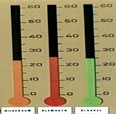
Final Scoreboard |
|
1st
2nd
3rd |
GB
• Plymouth ●
P • Algarve
NL • Hilversum |
26
25
24 |
 |
|
The Host
Town |
|
Carvoeiro, Portugal
Previously visited in Quartet. |
|
The
Visiting Towns |
|
All teams
had previously competed at this location in Quartet. |
|
The Venue |
|
Praia do Carvoeiro (Carvoeiro
Beach)
Previously visited in Quartet. |
|
The Games
in Detail |
|
Introduction
Following the opening titles, Yvonne Ferreira introduced her other fellow
commentators. They entered the arena in the same order and in the exact same
manner as they did in Quartet (see above).
Game 1 - The Rescue Party
The first game - ‘The Rescue Party’ - was introduced by RTP co-presenter
Eládio Clímaco and played in unison over 1 minute 15 seconds duration. It
featured all six competitors (three males and three females) from each team
and the three celebrities, who were located on chairs at the far end of the
course, near to the water’s edge. On the whistle, the teams had to race down
the 25m (82ft) course to the celebrities and then each team had to lift the
chair - with their celebrity still perched upon it - and carry them back to
the start. The team completing the game in the faster time would be declared
the winners.
This was a very straightforward and simple game which saw Great Britain and
Portugal in a neck-and-neck contest until the closing stages when Portugal
suffered a mishap and dropped the chair. This error permitted Great Britain to
complete the game uncontested and finished in 32 seconds. Portugal recomposed
themselves and completed the course in 2nd place in 39 seconds, with
Netherlands trailing in 3rd place in 1 minute 6 seconds.
|
Running Scores and Positions:
1st Plymouth (GB) (3pts awarded / 3pts total)
2nd Algarve (P) (2pts / 2pts)
3rd Hilversum (NL) (1pt / 1pt) |
Game 2 - Postal Delivery
(Mayors' Game)
The second game - ‘Postal Delivery’ - was introduced by BBC commentator Vince
Hill and was the first of two which featured the three mayors of the competing
countries. On the whistle, a postman on a bicycle had to ride into the arena
carrying a large leather sack which he would then hand to the presenter. Hill
then had to remove four ‘telegrams’ from inside the sack and hand one to each
of the mayors who were sitting around a table. The mayors then had to be
asked, one by one, to open their respective envelopes to reveal a message and
this would instruct the scoreboard operators to add a stated number of points
to his respective team’s score.
This was a very simple and straightforward game which appeared to be dependant
on which of the ‘telegrams’ Vince Hill decided to hand to the mayors. The
first mayor to reveal his message was Adel Santos, the mayor from Lagoa (the
administrative district in which Carvoeiro is located) and he awarded 1pt to
his team. This was followed by Reg Scott from Plymouth who awarded 3pts to his
team. The final mayor was Kris Rukken from NUTS-1 (the region of North
Netherlands in which Hilversum is located) and he awarded 2pts to his team.
|
Running Scores and Positions:
1st Plymouth (GB) (3pts awarded / 6pts total)
=2nd Hilversum (NL) (2pts / 3pts) ▲
=2nd Algarve (P) (1pt / 3pts) |
|
Entertainment
Intermission 1
There was a short break of 3 minutes 49 seconds break from the main programme
whilst the first of the three celebrities entertained the crowd in the manner
of their own profession. The first was Irish singer Dana, who sang her latest
release entitled If You Really Love Me.
Further details about Dana can be found in the corresponding section in
Quartet above.
|
Game 3 - Collecting the
Froth
The third game - ‘Collecting the Froth’ - was introduced by NCRV commentator
Dick Passchier and played in unison over 1 minute 45 seconds duration. It
featured a male competitor from each team wearing large foam-rubber sandals
and sitting on the edge of a podium. On the whistle, the competitor had to
stand up and run to the rear of the game and collect a can of beer. He then
had to shake the can profusely whilst returning to the front of the game via a
small tunnel. When he reached the front of the podium, he had to jump down
onto the sand, open the can of beer and empty its contents (now mainly froth)
into a small Perspex measuring cylinder. The game then had to be repeated
throughout. The team collecting the higher volume of froth would be declared
the winners.
This was a simple game which was dominated by Netherlands and at the end of
the permitted time their cylinder contained the greater amount of froth and
they were awarded 3pts for finishing in 1st place. Portugal finished in 2nd
place and Great Britain, with the least froth, were awarded 1pt.
|
Running Scores and Positions:
1st Plymouth (GB) (1pt awarded / 7pts total)
2nd Hilversum (NL) (3pts / 6pts)
3rd Algarve (P) (2pts / 5pts) ▼ |
|
Comments:
It appeared that the leakage issues experienced in the same
game during the Quartet recording on the previous Saturday had been
solved and the game equipment performed as planned. |
Game 4 - The Blindfolded
Bellringers (Celebrities' Game)
The fourth game - ‘The Blindfolded Bellringers’ - was also introduced by the
NCRV commentator and played in unison. It was the first of two which featured
the three celebrities from the competing countries, all of whom had been
blindfolded, sitting on chairs. Passchier then led them onto the arena and
stood them in front of three ropes hanging down and which were attached to
bells. Once all three were in position, they were then instructed to stand up
and rotate three times. Once completed, the game was started and the
celebrities had to walk forward with their hands in front of them in order to
feel for their respective rope. Once located, the rope had to be pulled to
sound their bell. The celebrity ringing their bell in the faster time would be
declared the winner.
This was another simple and straightforward game which only took a few seconds
to complete and saw Hans Kazàn representing Netherlands locate his bell in 8
seconds whilst Paulo Caetano (Portugal) rang his bell after 10 seconds. Dana,
representing Great Britain, lost her direction from the outset and was deemed
out of time.
|
Running Scores and Positions:
1st Hilversum (NL) (3pts awarded / 9pts total) ▲
2nd Plymouth (GB) (1pt / 8pts) ▼
3rd Algarve (P) (2pts / 7pts) |
Game 5 - Decorating the
Christmas Tree
The fifth game - ‘Decorating the Christmas Tree’ - was introduced by BBC
commentator Vince Hill and played in unison over a scheduled 1 minute 30
seconds duration. It featured a female competitor from each team and a giant
wooden façade of a Velcro-covered Christmas tree. The three competitors each
had a lifebuoy around her waist which was attached to an elasticated rope,
with the other three ends being joined together. On the whistle, the
competitors had to collect Velcro-covered decorations from their respective
containers located at 120° angles from each other around the edge of the game.
In order to do so, they had to stretch the rope which would inevitably hinder
the other competitors. Once a decoration had been collected, the competitor
had to stand on a circular podium at the centre of the game and then toss it
towards the tree to get it to stick. The game then had to be repeated
throughout. Any decorations that became dislodged during play would not be
counted. The team attaching the greater number of decorations would be
declared the winners.
This was a simple game which was difficult to adjudicate as the final scores
for each team would not be known until the end of the game due to ‘stuck’
decorations being knocked off by the competitors. However, at the end of the
extended permitted time of 1 minute 40 seconds, Eládio Clímaco, acting as
referee on this game, announced that all teams had stuck two decorations to
the tree and awarded 3pts to each team.
|
Running Scores and Positions:
1st Hilversum (NL) (3pts awarded / 12pts total)
2nd Plymouth (GB) (3pts / 11pts)
3rd Algarve (P) (3pts / 10pts) |
Game 6 - Collecting Ping-Pong Balls (Celebrities' Game)
The sixth game - ‘Collecting Ping-Pong Balls’ - was introduced by NCRV
commentator Dick Passchier and played in unison over one minute duration. It
was the second of two games which featured the three celebrities from the
competing countries. In the middle of the arena was a podium which was
surrounded by three padlocked boxes. On the whistle, the celebrities, each
equipped with one key, had to run to one of the boxes and try to unlock the
box with the key they had been given. If the key failed to open the lock, they
then had to move to one of the other boxes to see if it fitted. This had to be
repeated until the correct lock was found. If successful, the box then had to
be opened and this would release a number of ping-pong balls to fall onto the
arena floor. The celebrities then had to collect as many of the balls as they
could and keep them safe on their person. Irrespective of which box the balls
fell from, they could be picked up by any of the three celebrities. The
celebrity collecting the greater number of balls would be declared the
winners.
This was a very simple game which saw Great Britain somewhat hindered by the
type of clothing worn by their celebrity, Dana. Dressed in denim jeans and
pullover, she was limited in terms of places to store the balls and how the
tightness of the denim restricted her movement, whereas the male celebrities
were attired in jackets with various pockets, open-fronted shirts and loose
trousers. However at the end of the game, Netherlands had collected 31 balls
(although eleven of which were actually part of an illusion but permitted to
count), Portugal had collected 15 balls and Great Britain had collected 10
balls.
|
Running Scores and Positions:
1st Hilversum (NL) (3pts awarded / 15pts total)
=2nd Plymouth (GB) (1pt / 12pts)
=2nd Algarve (P) (2pts / 12pts) ▲ |
|
Entertainment
Intermission 2
There was another break of 5 minutes 30 seconds from the main programme whilst
the second of the three celebrities entertained the crowd. On this occasion,
it was Dutch magician / illusionist Hans Kazàn, who displayed his sleight of
hand with sponge balls and metal rings. To assist him with the illusions, he
requested the services of NCRV commentator Dick Passchier and fellow celebrity
Dana.
Further details of Hans Kazàn can be found in the corresponding section in
Quartet above.
|
Game 7 - The Wine Collectors
The seventh game - ‘The Wine Collectors’ - was introduced by RTP
co-commentator Yvonne Ferreira and played in unison over 1 minute 45 seconds
duration. It featured two competitors (one male and one female) from each team
and a set of three wine vats. The male competitors, armed with large bowls,
were blindfolded and each was standing in front of one the vats. The females
were crouched down underneath a podium with four holes cut in the top, in
front of the game, and also armed with large bowls. On the whistle, the taps
of the vats would be opened and the male competitor had to fill his bowl and
then traverse it to his competitor’s receptacle. In order for him to pour the
liquid in the correct hole, each of the females were armed with a different
type of noise-making equipment - Great Britain (bicycle hooter), Portugal
(covered tambourine) and Netherlands (open-tambourine). Once the liquid had
been transferred, the female then had to carry the bowl and empty its contents
into an inverted triangular measuring cylinder. She then had to return to the
podium, but had to crouch down underneath a different hole to the one she had
used previously. This was in order to ensure that the male competitors did not
become complacent as to the location of their female team-mate. The game then
had to be repeated throughout in the same manner. The team collecting the
greater volume of liquid would be declared the winners.
This was another straightforward game which ended without incident. At the end
of the game Yvonne Ferreira announced that Great Britain had collected the
greater volume of liquid and were awarded 3pts. Portugal secured 2nd place and
2pts and Netherlands finished in 3rd place, gaining 1pt.
|
Running Scores and Positions:
1st Hilversum (NL) (1pt awarded / 16pts total)
2nd Plymouth (GB) (3pts / 15pts)
3rd Algarve (P) (2pts / 14pts) ▼ |
Game 8 - Sorting the Food
(Presenters' Game)
The eighth game - ‘Sorting the Food’ - was also introduced by the RTP
co-commentator and played in unison over 45 seconds duration. It was the first
of two games that featured three of the four presenters of the three competing
countries (with Eládio Clímaco representing Portugal). At the start of the
game, each of the presenters was blindfolded and standing behind a table on
which there was a large receptacle containing nine items of food found in a
typical Portuguese restaurant kitchen. These items included a leek, an apple,
a lemon, a sardine, a pineapple, a potato, an octopus, a large red cabbage, a
large fish and a chilli pepper. On the whistle, the presenters had to use
their hands (and noses if they wished to smell the items) to find the three
items requested by the rules - the lemon, the red cabbage and the sardine -
and toss the unwanted ones out of the receptacle. The presenter completing the
game with the greater number of correct items in the faster time would be
declared the winners.
This was somewhat of a simple game that Portugal completed in just 17 seconds
and were awarded 3pts. Netherlands finished in 2nd place in 40 seconds, whilst
Great Britain only retained one of the correct items (the red cabbage), with
the other two (the lemon and sardine) observed lying on the sand at the end of
the game.
|
Running Scores and Positions:
1st Hilversum (NL) (2pts awarded / 18pts total)
2nd Algarve (P) (3pts / 17pts) ▲
3rd Plymouth (GB) (1pt / 16pts) ▼ |
|
Comments:
There was a slight change in the rules to this game from
the original version in Quartet. Previously, the presenters had had
to find all three items to finish the game and this resulted in none being
able to do so and no points were awarded to any of the teams. However, the
rules were slightly relaxed in Trio whereby if all of the items
could not be recognised and retained, then points would be awarded
according to the number of correct items remaining in the receptacle. |
|
Entertainment
Intermission 3
There was another break of 3 minutes 28 seconds from the main programme whilst
the children of the local towns and villages gave a display of dancing and
singing.
|
Game 9 - Finding the Wine
(Mayors' Game)
The ninth game - ‘Finding the Wine’ - was introduced by BBC commentator Vince
Hill and played in unison. It was the second of two games which featured the
mayor of each of the competing teams but on this occasion also involved a male
member of their respective team. At the start of the game, the three team
members were standing on a high podium, each with five water-filled balloons
inside their bathing costumes. Whilst four of the balloons contained clear
water, one was filled with red-coloured dye. On the whistle, the mayors, each
armed with a pointed rod, had to stand on a small podium in front of the
competitors and take it in turn at bursting a balloon on an opposing team’s
competitor. If clear water poured from the costume, the mayor had to wait for
a second essay. If red-coloured water flowed, then the mayor was deemed to
have completed his essays and awarded the respective finishing position.
The first round of this simple game saw the mayor of NUTS-1 (Hilversum)
bursting a balloon of the competitor from Portugal but could only produce
clear water. He was followed by the mayor of Plymouth bursting a balloon of
the competitor from Netherlands but he achieved the same result. The final
mayor to participate was from Lagoa (Carvoeiro) bursting a balloon of the
competitor from Great Britain and, as had been the case previously, the essay
only produced clear water.
The second round saw Great Britain being successful in producing the red dye
whilst Netherlands and Portugal both failed for a second time.
The third round saw both Netherlands and Portugal again producing just clear
water.
The fourth round saw Netherlands being successful but Portugal once again
failed in producing the red dye from a balloon.
With just one balloon remaining in the costume, and on their fifth essay,
Portugal finally produced red dye.
|
Running Scores and Positions:
1st Hilversum (NL) (2pts awarded / 20pts total)
2nd Plymouth (GB) (3pts / 19pts) ▲
3rd Algarve (P) (1pt / 18pts) ▼ |
Game 10 - Dressing Up
(Presenters' Game)
The tenth and penultimate game - ‘Dressing Up’ - was introduced by RTP
co-commentator Yvonne Ferreira and played in unison over two minutes duration.
It was the second of two games that featured three of the four presenters of
the three competing countries (with Eládio Clímaco again representing
Portugal). At the start of the game the three male presenters were standing on
carpets on the beach with their backs to the game. Behind them was a changing
tent in which three deep baskets each contained four colour-coded items of
pantomime-style clothing - a jacket, a scarf, a pair of trousers and a hat. On
the whistle, the presenters had to turn around and run to the tent and collect
their first item of clothing. Once collected, they then had to run back to the
carpet and attire oneself with the item. This then had to be repeated until
all items had been attired and the presenter was back on the carpet. The team
completing the game in the faster time would be declared the winners.
This was a very straightforward game which saw Great Britain finishing in 1st
place in 1 minute 9 seconds, followed by Netherlands in 2nd place in 1 minute
12 seconds and Portugal in 3rd place in 1 minute 16 seconds.
|
Running Scores and Positions:
=1st Plymouth (GB) (3pts awarded / 22pts total) ▲
=1st Hilversum (NL) (2pts / 22pts)
3rd Algarve (P) (1pt / 19pts) |
|
Entertainment
Intermission 4
There was a final break of 2 minutes 34 seconds from the main programme whilst
the third of the three celebrities entertained the crowd. On this occasion, it
was Portuguese bullfighter / horseman Paulo Caetano, who put on a dressage
display on his horse.
Further details of Paulo Caetano can be found in the corresponding section in
Quartet above.
|
Game 11 - The Celebration
Cake
The eleventh and final game - ‘The Celebration Cake’ - was introduced by RTP
co-commentator Eládio Clímaco and played in unison over 1 minute 30 seconds
duration. It featured all six competitors (three males and three females) from
each team standing back to back in a circle with the waists of their trousers
sewn together. On the whistle, the competitors had to work together and make
their way down to the water’s edge in order to collect a large three-tiered
cake from the water’s edge. They then had to set off a firecracker which would
release the cake from its mounting. They then had to lift the cake aloft their
heads and transport it back to the start of the course. The team completing
the game in the faster time would be declared the winners.
This was a straightforward game which was played without incident and saw
Portugal finish in 1st place in 40 seconds, followed by Great Britain in 2nd
place in 42 seconds, with Netherlands deemed as finishing in 3rd place after
failing to finish the game within the permitted time.
|
Final Scores and Positions:
1st Plymouth (GB) (4pts awarded / 26pts total)
2nd Algarve (P) (6pts / 25pts) ▲
3rd Hilversum (NL) (2pts / 24pts) ▼ |
|
|
Additional
Information |
|
As
a result of the withdrawal of the Belgian team from Blankenberge following the
completion of the first recording, the second version of the programme went
ahead with only three of the original four teams and was - for obvious reasons
- renamed Trio.
The
original Portuguese team of Praia do Carvoeiro that participated in Quartet
were renamed, competing as Algarve for the Trio competition.
British production team members present on location were drafted in to produce
this remounted production. They were to take
over from Quartet director Etienne d'Hooghe, who had been dropped by
co-producer António Bivar following the debacle of the first recording. This
proposition was
not entirely without its logistical problems. In a 2023 telephone call, former
It's A Knockout producer Geoffrey Wilson revealed that the language
barrier was a real challenge as the new producer (Wilson) and director (Bill
Taylor) spoke no Portuguese and the camera crew that they had to work with
spoke no English. In the
end, they all convened and stayed up late into the night, trying to work out a series
of signals, explaining what the BBC meant by a mid-shot and so on, and eventually -
somehow - they managed to strike up a rudimentary understanding sufficient to
make the programme.
One person to benefit from their participation in Trio was
Hans Kazàn, the Dutch magician, who impressed in the programme and struck up
an excellent relationship with Wilson and Taylor. This directly led to Hans
gaining his first work in British television with his magic act.
Even with the second recording, the problems continued and the BBC, in
particular, were concerned that the programme was not technically fit for
broadcast. The surviving 1" master tapes retain their BBC VT Recording
Report
forms and these are quite damning about the technical quality of the
recording. The earliest, dated 28th November 1982, notes: "Vision of variable
quality. One camera produces bent verticals on picture. Most of material is
4th or 5th generation." A subsequent report (dated 9th December 1982) included
within the 1" master tape of the edited transmission version pulls no punches:
"Possibly the worst quality show I have ever seen in every respect. It doesn't
off-lock [break up] however, so satisfactory for TX [transmission]."
The BBC listings magazine Radio Times was advised of the
programme title and content for their Christmas double-issue and the BBC1
transmission was scheduled for 6.00-6.50pm on Thursday 30th December 1982.
However, even over and above the technical concerns mentioned previously,
there was something of a storm brewing with It's A Knockout's star
presenter, Stuart Hall at its centre, allegedly disgruntled about not being a part
of the next phase of the series. It soon became apparent that
the programme was now something of a hot potato and was eventually pulled from
the schedule to keep Hall - then a very big name at BBC Manchester - onside.
It was replaced with a hastily compiled retrospective, Best of Knockout, hosted by Hall. You
can read more about this in
Knockout TV. As the
Christmas issue of Radio Times had a lead time of nearly a month back
in the early 1980s, by the time the change was made to the schedule it was too
late to replace the Trio listing with one for Best of Knockout.
Without that listing, of course, It's A Knockout fans would not have
noticed the substitution or been aware that there was a new
JSF-type series which had been made and then not broadcast.
The BBC did not retain a
copy of Trio in their television archives and the result was never
publicised in Great Britain. However, two 1" broadcast master tapes have been
preserved in a private collection since the 1980s. One of these is complete with Vince Hill commentary, while the other - about 50
seconds shorter - is a later edit that omits Hill's dubbing session,
potentially in readiness for Stuart Hall to record a replacement voiceover
(something which did not transpire).
| |
 |
The
surviving 1" master tapes of the BBC version of Trio.
Photo © Alan Hayes, 2023 |
| |
The programme, however, was broadcast in the Netherlands and Portugal.
Newspaper archives give transmission dates and times for the Christmas
special, with the Dutch version airing as Zeskamp-Speciaal
like all JSF Christmas specials on the NCRV.
The British version finally received its first public screening
on Saturday 6th December 2025 when it formed part of a festive selection of
archive programming at Kaleidoscope's A Box of Delights! event held at
The Midlands Arts Centre (MAC) in Birmingham, United Kingdom. Forty-three
years had passed since it was hurriedly replaced in the
BBC1 schedule of Thursday 30th December 1982. Several JSF fans were present to
see Trio's public debut including members of JSFnetGB. It would be fair
to say that the general consensus of those present was that the programme was
deeply flawed in comparison to regular Jeux Sans Frontières programmes.
There were comments such as "What was that about? I somehow got to the end of
it," and "It looked like a TV pilot made to establish the viability of a
concept rather than something actually made for broadcast". The locals drafted
in to give the production a bit of life also raised a little mirth among the
audience, particularly the children who appeared disinterested and sometimes
questioning of what was going on around them. It was also commented upon that
the disinterest seemed to extend to presenter Vince Hill.
Quartet / Trio must count as a sorry end for
the first era of Jeux Sans Frontières. |
|
Made
in Colour • This programme exists in the Kaleidoscope Archive
Dutch version does not exist / Portuguese version exists |
|
|
|
JSFnetGB Series Guide pages researched by
Neil Storer and Alan Hayes
with Ischa Bijl, Julien Dessy, Sébastien Dias, David
Hamilton, Denis Kirsanov, Paul Leaver, Philippe Minet,
Christos Moustakas, David Laich Ruiz, Marko Voštan and JSFnet Websites |
|
|